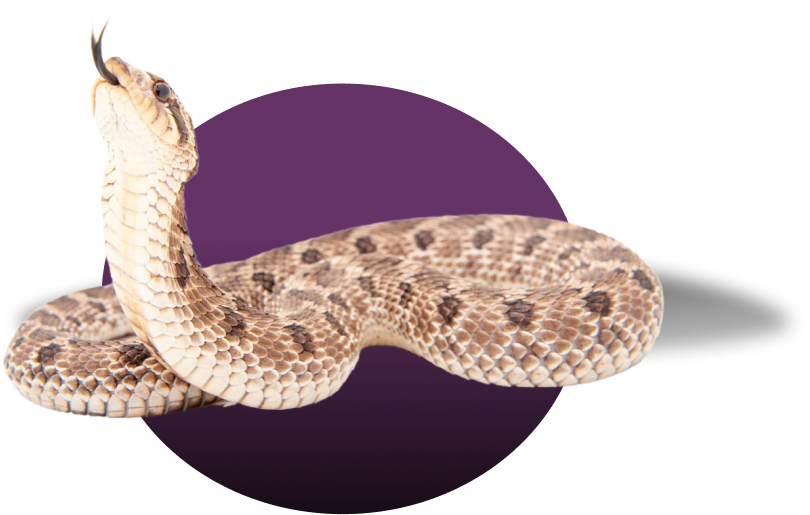
In the wild, western hognose snakes have a lifespan of 9 to 19 years, with an average of 14 years. In human care, their lifespan ranges from 15 to 20 years.
Adult size (males 15-24in. /females 28-36in) exceptionally mild temperament and easy care make the Western Hognose an ideal pet. With several new pattern and color morphs becoming readily available in the trade it is easy to see how this species is favored by many.
Do you have a snake that is of Ideal weight, Skinny or do you have a little Chonker?
A western hognose snake’s body condition can be described as thin, ideal, or obese.
Thin
• A thin snake’s ribs, spine, and skull are prominent and visible through the skin.
• The snake feels light when held.
• The snake’s eyes may appear sunken.
• The snake’s abdomen is soft with no firm masses.
• The snake’s back may have an upside-down V shape.
Ideal
• An ideal snake’s back looks like an upside-down U.
• The snake’s epaxial muscles are visible and feel strong.
Obese
• The snake’s back may have an dip in the middle (like an M).
• The snake’s back may appear wider from the top than from the side.
• The snake may have lumps of fat under its skin.
• The snake’s back may have folds of fat that are visible when it moves.
• The snake’s vertebrae are not felt when its back is palpated.
You can monitor your snake’s weight weekly to check for sudden weight loss, which may indicate illness.
What health issues do Western hognose snakes have?
Hognose snakes are generally fairly hardy but may be prone to mites, dysecdysis (difficulty shedding), stomatitis (mouth rot), scale rot, and reproductive issues. Feeding strikes are also not uncommon in hognose snakes, and some will even refuse non-amphibian prey.